
By Tiffany Slowinski
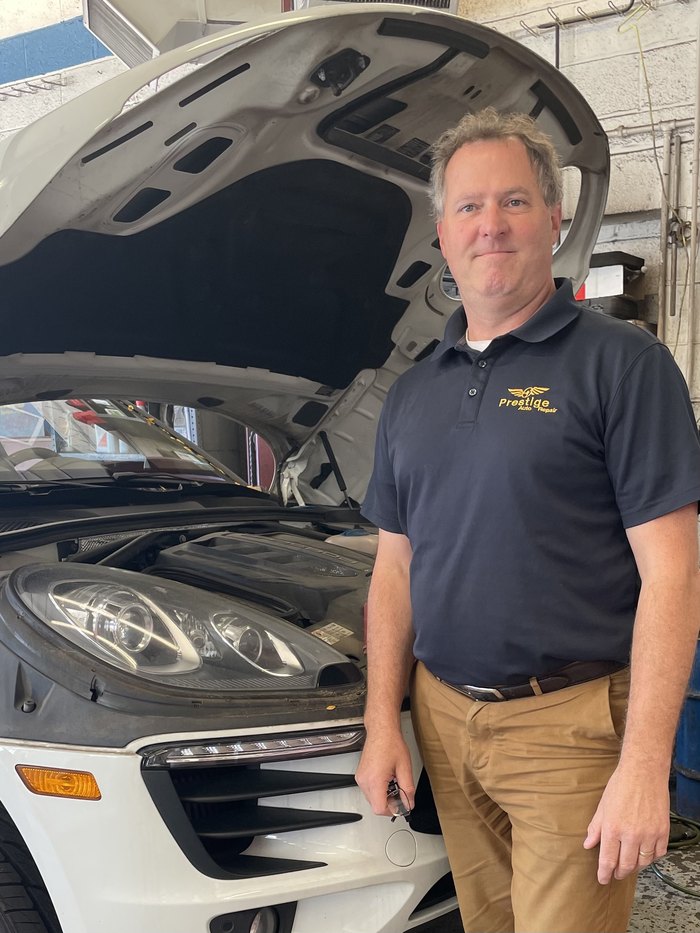
Garden State Circle is supported by the businesses that partner with us, and Prestige Auto Repair, Bernardsville is an authority partner. We interviewed Jim Jackson, who leads the shop, about the check-engine-light questions drivers here actually ask. The partnership pays for the reporting; it does not decide the answers. Most of the answers below are not published anywhere else.
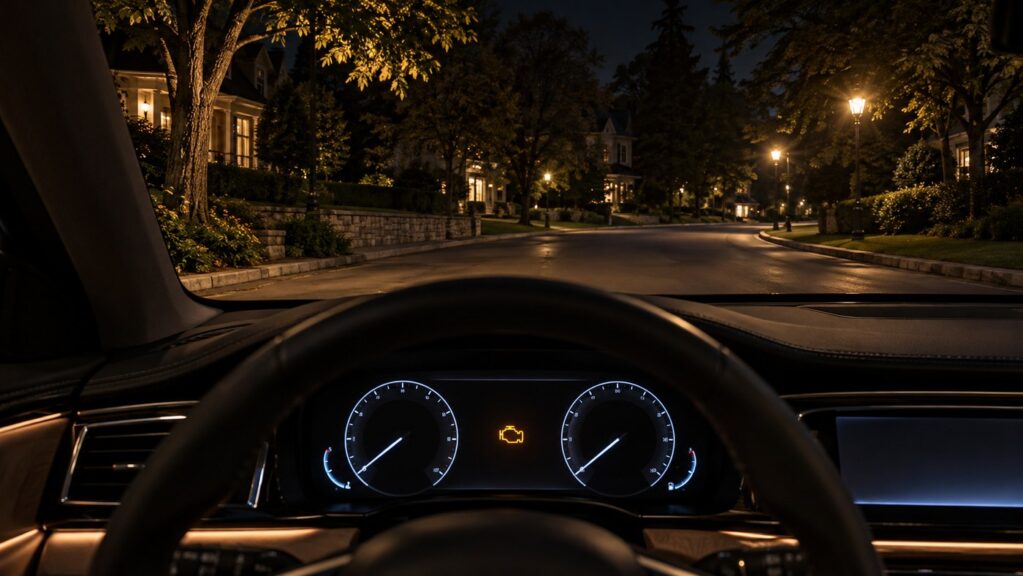
A check engine light has a special talent for showing up when you are nowhere near home and immediately making you wonder whether the car is about to die. The good news is that Jim Jackson, owner of Prestige Auto Repair in Bernardsville, gives drivers a very simple first test: look at the light, then pay attention to whether the car is actually driving differently. If the light is steady and the car feels normal, Jackson says “it’s safe to proceed and drive home.” His rule for his own family is that if the car is not running any differently, they can continue driving. A flashing light is a completely different situation and should not be treated the same way.
Flashing means stop
Jackson’s wording here is direct: “If the check engine light is flashing you should stop the car and not drive. It means the engine is actively misfiring.” He does not give a safe mileage limit or a rule for how far you can push it, so neither should the driver.
That distinction is the first thing to remember. A steady light with no change in how the car runs is one situation, while a flashing light is the one Jackson says requires stopping the vehicle rather than trying to make it home. A check engine light can come on because a system is operating outside its normal parameters and needs attention, or because something has failed that can create a drivability problem. The light itself tells you there is an issue, but it does not tell you the entire diagnosis.
That is also why Jackson separates “Can I get home?” from “What is actually wrong?” The first question can sometimes be answered by whether the light is steady or flashing and whether the car is behaving differently. The second requires figuring out which system triggered the warning and what inside that system caused it.
Sometimes it really is the gas cap
Jackson says “the most common thing we see is a loose gas cap.” That applies to vehicles that still use a gas cap. He explains that the system checks itself every couple hundred miles and the gas cap is something the driver opens and closes every time the car is filled.
That makes it an easy thing to disturb, and it is one reason a light can appear even when the car still feels completely normal. The important part is not to assume that every light is a gas cap just because it is common. Jackson’s point is that the cause still has to be identified.
A steady light is permission to get home safely in the situation he described, not permission to ignore the warning indefinitely.
Why the free code read is not the whole answer
Many parts stores will connect a scanner and tell you the code that triggered the light. Jackson says that information can be useful, but it should not be confused with a diagnosis. “It’s not a diagnosis. The best thing I can say is it’s to tell us what system on the vehicle is having a problem with.”
He uses a house analogy. Imagine a light by the front door that turns on when something inside the house is wrong. The light tells you there is a problem somewhere, but it does not tell you whether the problem is heating, air conditioning or plumbing.
The code works the same way in Jackson’s explanation. It narrows the problem to a system. The next step is figuring out what inside that system is actually wrong.
Why diagnosis has its own fee
Jackson says the diagnostic fee is not credited to the repair, and that this is generally how the industry works, not a Prestige policy. His comparison is an x-ray. If a doctor orders an x-ray, sees the problem and then sends you to another doctor to set the bone, you do not get the x-ray fee back because the first doctor did not perform the final treatment. The value was in identifying the problem.
Automotive diagnosis works the same way in Jackson’s explanation. Pulling a code is the beginning. Testing the system and determining which part, condition or failure actually caused the light is the diagnostic work.
Jim Jackson says there is a testing fee because the most experienced technician, who is usually the highest paid, is the one finding the problem, using the most expensive tools the shop owns.
For drivers comparing local repair options, Garden State Circle has a guide to Auto Repair Shops in Somerset Hills, NJ. The guide helps drivers understand what different shops handle and what questions to ask before booking service.
What to do tonight
If the light is steady and the car is not running differently, Jackson says it is safe to proceed and drive home. Once you are home, schedule the diagnosis rather than assuming the warning will sort itself out. If the check engine light is flashing, stop the car and do not drive it. Jackson says that means the engine is actively misfiring.
That is the entire first decision. Steady and driving normally means get home and get it checked, while flashing means stop. After that, treat a code as a clue rather than the answer because a scanner can identify the system that complained, while a diagnosis tells you why. The warning light starts the conversation; it does not finish it.
About This Article
This article is produced by Garden State Circle and is part of our local guides to auto repair shops in the Somerset Hills and West Morris.
Written by Tiffany Slowinski, Co-Owner, Garden State Circle. Insights were provided by Prestige Auto Repair, Bernardsville and reflect this market in October 2026.
Also from this reporting: Dealer or Independent Shop for a European Car? What Jim Jackson Says Each Can Do and New Jersey State Inspection: What Actually Gets Checked, and Why Cars Fail.
This article is maintained. If anything here is wrong or has changed — a name, an address, hours, or whether a business has closed — tell us and we will check it. Businesses named here are welcome to write in directly. admin@gardenstatecircle.com