
Published by Garden State Circle — Tiffany and Jake Slowinski · Somerville, Bridgewater

How Jason Marchitto Uses Exposure and Response Prevention at Blueprint Mental Health
By Tiffany Slowinski
A word on a screen could be an exposure exercise for someone afraid of vomiting. A vomit-flavored jelly bean could be another.
Both are hypothetical examples Jason Marchitto, MA, LPC, LCADC, SAC, ACS, a therapist who specializes in obsessive-compulsive disorder, or OCD, uses to explain his work at Blueprint Mental Health in Somerville.
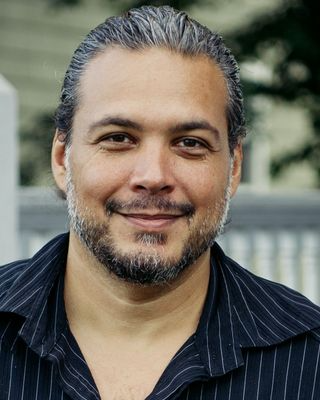
The method is called exposure and response prevention, or ERP. Encountering something frightening is part of it. The crucial practice, Marchitto says, is resisting the compulsion a person usually uses to relieve the fear.
“The exposures ultimately just give the client a place to practice the response prevention, right?” he says.
That distinction matters to someone wondering what treatment will ask of them. The exercise gives the person a chance to experience anxiety while working with a therapist on how they respond. The jelly bean is one possible illustration. What happens after the fear arrives is the lesson.
What Happens After the Thought
OCD can involve intrusive, unwanted thoughts and repetitive behaviors or mental acts. Marchitto pays attention to what a person does, or avoids doing, to relieve the fear. That is one way he identifies the compulsions treatment needs to address.
In the OCD cycle he describes, repeatedly seeking reassurance can become one of those compulsions. A person looks for certainty, feels some relief and then needs the answer again. Marchitto’s work focuses on helping the person recognize and resist that response.
For someone who has spent therapy sessions returning to the same feared possibility, that can change the purpose of the conversation. The therapist helps identify the pattern and practice responding differently, rather than repeatedly trying to settle the feared question.
Marchitto describes ERP as a specialized form of cognitive behavioral therapy (CBT) that can happen across a table. Although traditional talk therapy is not indicated for OCD treatment, the conversation and the client-counselor relationship are still vital. For example, taking a person’s history can remain a part of understanding them outside of ERP to help build the relationship. However, the ERP work has a specific focus on the responses that keep the OCD cycle going.
The National Institute of Mental Health identifies ERP as a treatment shown to reduce compulsive behaviors. In practice, the clinician and client work together on facing triggers and resisting rituals. The person has support while learning to do something that can feel uncomfortable.
A Plan Built With the Person Doing the Work
Marchitto describes the opening appointments as conversations about how treatment works before exposure exercises begin. Understanding the purpose comes before asking someone to practice it.
One question helps shape the goals: “I ask you, what would your life look like without OCD in it?”
The answer gives the treatment a direction. It asks the person to consider what they want to be able to do, then helps Marchitto and the client connect that aim to the work ahead.
Together, they can build what clinicians call an exposure hierarchy: a set of feared situations or experiences rated by how much anxiety they provoke. Marchitto says the scale is usually one to 100, though one to 10 can also be used. The ratings describe the person’s experience of the fear.
In his hypothetical vomiting example, exercises might involve a word, an image, a sound or that jelly bean. These illustrate how different experiences can bring up a fear. It can also help to jump around the hierarchy at times to keep triggers novel and learn that they are safe without an expectancy of the level of distress they may feel. This process is not intended to be a treatment sequence for a reader to follow; the actual plan is developed with a clinician.
It’s important to note that two people who name the same fear may need very different exercises, Marchitto says. The relevant questions include what each person avoids and what they do to feel reassured. A shared description of the fear does not tell the therapist everything about how it operates in someone’s day. For example, one person may fear vomiting due to embarrassment and another due to the feeling of nausea. Understanding the fear helps to create the appropriate exposure.
That is why the plan needs the person’s participation. The client helps describe the anxiety, identify the compulsions and establish the life they want treatment to support.
Measuring More Than the Fear
“We can’t stop a thought from showing up,” Marchitto says.
The work he describes gives the person something to practice when it does. A thought can arrive without every familiar ritual having to follow it. Non-engagement with the thought is emphasized during this process. Learning that response can help someone approach the things that they have been avoiding, even while anxiety is present.
When discussing progress, Marchitto returns to what becomes possible for the person. “Their life gets a little bit bigger.”
There is no fixed timetable in that description. The goals and exercises belong to the individual. Someone considering treatment can ask a clinician how they assess OCD, how they identify compulsions and how they would build an exposure plan together.
Parents and partners can bring a practical question to the treatment conversation: How do I support someone without becoming part of a reassurance ritual? That gives the clinician a chance to explain how loved ones can help with the agreed plan.
Marchitto says he chose this specialty partly because he feels people with OCD are often misdiagnosed, under-treated and underserved. His question about life without OCD brings the purpose of the work back into view. A word on a screen or a jelly bean can be a place to practice. The reason to practice is the life the person wants to participate in beyond the exercise. At some point, the client moves away from the hierarchy entirely and moves on to the greatest exposure of all, living a full value-based life, triggers and all.
Blueprint Mental Health is listed in Garden State Circle’s guide to Mental Health Providers in Bridgewater, NJ.
Connect With Blueprint Mental Health
Blueprint Mental Health
73 West End Ave.
Somerville, NJ 08876
908-256-6965
blueprintmentalhealth.com
[email protected]
Ask the practice about consultation options and current clinician availability.
Blueprint Mental Health offers in-person sessions in Somerville. Marchitto also sees clients by telehealth anywhere in New Jersey. The practice is out of network; clients are given a superbill to submit to their insurance carrier.
If you are in crisis or an emergency, call 911 or go to your local emergency room. You can also call or text 988, the Suicide and Crisis Lifeline.
About This Article
Garden State Circle interviewed Jason Marchitto of Blueprint Mental Health in November 2026. Details may change; confirm current details directly with the practice.
Jason Marchitto reviewed this article and sent revisions in November 2026.
Written by Tiffany Slowinski, Co-Owner, Garden State Circle.
This article is general information and is not medical or mental health advice. Decisions about treatment belong with a licensed clinician who knows your situation.
This article is produced by Garden State Circle and is part of our local coverage of Somerset County.
This article is maintained. If anything here is wrong or has changed — a name, an address, hours, or whether a business has closed — tell us and we will check it. Businesses named here are welcome to write in directly. [email protected]
See Blueprint Mental Health’s page on Garden State Circle.
Blueprint Mental Health is a member of the Garden State Circle, which verifies its members’ information and publishes features about them. How the Circle works.