

By Tiffany Slowinski
There are few things that can send a parent down a late-night Google rabbit hole faster than wondering whether their child should be talking more.
Maybe your 3-year-old uses a few words but is not connecting them. Maybe family members understand them, but almost nobody else does. Maybe they seem to understand less than you expected. Or maybe you cannot point to one specific thing. You just have a feeling something is off.
Denise Favor Bayles, M.A., CCC-SLP, owner of Bayles Family Speech Center in Bridgewater, has a very simple answer for parents in that spot.
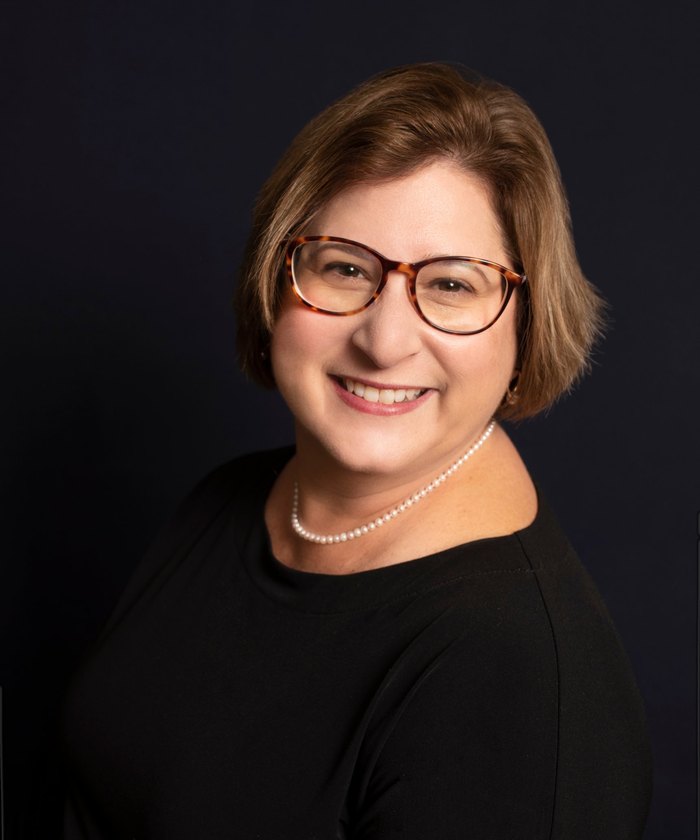
Owner, Bayles Family Speech Center, Bridgewater
“I tell a parent never to wait.”
Bayles says parents should “go with their gut and if they are even a little bit concerned get them checked by a speech language pathologist.”
That does not automatically mean signing up for months of therapy. It can start with something much smaller: a speech and language screening.
You can ask for a screening first
Bayles offers preschool speech and language screenings to look for at-risk factors. A screening is different from jumping straight into a full evaluation. It gives a speech-language pathologist a chance to look at what is happening and decide whether there is enough concern to take the next step.
That distinction matters for the parent who is thinking, “I’m worried, but I don’t even know where to start.”
According to Bayles, being worried at all is enough reason to ask to have someone look.
She says the research shows that waiting too long can lead to language, reading, writing and math delays later as a child moves through school. Her advice is not to diagnose the problem yourself. It is to get the right person involved early enough to tell you whether there is a problem at all.
“Don’t wait. It’s better to get checked and start therapy as early as possible,” Bayles says.
What makes her want to take a closer look?
Observing play skills is vital as playing is the foundation for speech-language development and socialization. Play skills that are not developmentally appropriate, are a risk factor for speech-language delay.
Bayles points to several things that can signal a child should be screened or evaluated.
A child may be talking late or not connecting words. They may make so many sound errors that other people have a hard time understanding them. A parent may notice that the child struggles to follow directions.
She also looks at the bigger developmental picture. Bayles says fine and gross motor development that does not seem to match communication development can be an at-risk factor. So can a more general delay across developmental milestones.
None of those things, by themselves, are a diagnosis.
They are reasons to ask questions.
That is the part parents sometimes make harder than it needs to be. You do not need to know whether you are looking at a speech sound issue, a language delay or something else before you call a speech-language pathologist. Figuring that out is the point of the screening or evaluation.
What if my child is almost 3?
Bayles spent many years working in New Jersey early intervention, which serves children from birth to age 3. She says the youngest children remain her niche, and the sweet spot of her practice is birth through age 6.
That means she regularly works with families right at the point when parents are asking whether to wait a little longer or get someone involved.
Her answer stays the same: get them checked.
For families looking for local options, Garden State Circle also maintains a guide to Speech Therapists in Somerset County, NJ.
What does the first call actually need to sound like?
It does not need to sound clinical.
You do not need to walk in knowing the right terminology. You can say your child is not talking as much as you expected. You can say they are hard to understand. You can say they are not putting words together. You can say you are having trouble getting them to follow directions.
You can also simply say, “I’m concerned and I’d like a screening.”
From there, the speech-language pathologist can help determine whether a full evaluation makes sense.
Bayles also offers Kidnection, which she describes as a communication-development class for infants and toddlers. It is not direct therapy. For some families with younger children, it can be another way to support communication development and learn what to watch for.
What happens if therapy is recommended?
Bayles says therapy is built around the individual child and the areas where that child is having difficulty. Family involvement matters too. She does family training at the end of every session so parents understand what to carry over at home.
The practical side matters, especially when you are trying to figure out whether something can fit into an already packed family schedule.
Bayles Family Speech Center sees patients Monday through Thursday from 8 a.m. to 4:30 p.m. As of fall 2026, Bayles says the practice is taking new patients and does not have a wait list.
The practice is out-of-network. It provides a superbill with coding that families can use when submitting an out-of-network claim to their insurance company.
If you are worried this week, do this
You do not need to spend another month comparing your child to every kid at preschool, every cousin at Thanksgiving and every milestone chart you can find online.
Start with the actual concern in front of you.
- Write down what you are noticing: talking, connecting words, speech clarity, following directions or broader developmental concerns.
- Call a speech-language pathologist and ask whether a screening or full evaluation makes sense.
- Tell them exactly what worries you, even if you cannot explain it perfectly.
- If therapy is recommended, ask what you should be practicing at home between sessions.
The big takeaway from Bayles is refreshingly uncomplicated.
Parents do not need to know the answer before they make the call.
They just need to make the call.
Bayles Family Speech Center, in Bridgewater, is led by Denise Favor Bayles, M.A., CCC-SLP, who founded the practice in 2007.
About This Article
This article is produced by Garden State Circle and is part of our local guide to speech therapists serving Somerset County.
Garden State Circle is supported by the businesses that partner with us, and Bayles Family Speech Center, Bridgewater is an authority partner. We interviewed Denise Favor Bayles, who leads the practice, about the late-talking questions parents here actually ask. The partnership pays for the reporting; it does not decide the answers. Most of the answers below are not published anywhere else. This piece is part of our ongoing reporting on Bayles Family Speech Center; see also our companion pieces on childhood apraxia of speech in plain English and how to tell a picky eater from a feeding problem. Nothing on this page is medical advice. Every treatment described here carries risks that depend on your own health and history, and the person to discuss them with is a licensed provider who has examined you.
Written by Tiffany Slowinski, Co-Owner, Garden State Circle. Insights were provided by Bayles Family Speech Center, Bridgewater and reflect this market in September 2026.
This article is maintained. If anything here is wrong or has changed — a name, an address, hours, or whether a business has closed — tell us and we will check it. Businesses named here are welcome to write in directly. admin@gardenstatecircle.com