

By Tiffany Slowinski
When a child is hard to understand, most parents are not sitting at home debating the difference between articulation and motor planning.
They are thinking something much simpler.
Why is talking so hard for my child?
Denise Favor Bayles, M.A., CCC-SLP, owner of Bayles Family Speech Center in Bridgewater, works with children with motor speech difficulties and is Level 2 PROMPT trained. She describes childhood apraxia of speech in plain language: the child knows what they want to say, but getting that message from the brain to the mouth is the problem.
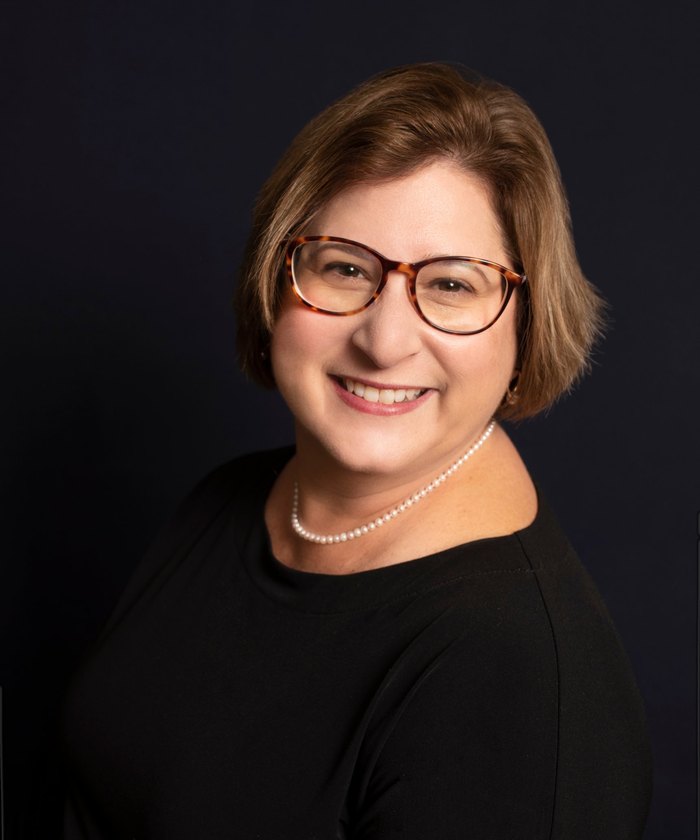
Owner, Bayles Family Speech Center, Bridgewater
Bayles describes apraxia as a motor planning disorder where “messages form in the brain and then get lost in translation moving to the mouth.”
That breakdown can make words come out incorrectly and can create confusion and incoordination when a child is trying to connect sounds and words.
Apraxia is not the same thing as an articulation problem
Parents often hear several speech terms at once, and they can start to blur together.
Bayles separates articulation from apraxia this way: articulation is about the production of speech sounds. A child may have difficulty with where a sound is placed or may be delayed in producing certain sounds.
Apraxia is different. Bayles describes it as a neurological condition involving motor planning.
That difference matters because the therapy has to address the specific place where communication is breaking down.
A speech-language pathologist first evaluates the child. Bayles says the goals that come after that evaluation are based on the weaknesses that show up. The plan is “very individualized.”
In other words, two children who are both difficult to understand may need very different things.
What can apraxia look like?
Bayles shared the example of a child who was using “ba” for essentially everything.
The struggle was visible in the child’s mouth. The child knew what they wanted to communicate, but could not get the words out. That led to frustration and sometimes tears.
For Bayles, the work is figuring out exactly where the breakdown is happening.
She may begin with airflow to help a child get sounds out. Then the work can move to the level of the lip. For children who are already talking but remain difficult to understand, she may work on the tongue and on coordinating the tongue and jaw.
Exercises and techniques are then built around what that child needs, with follow-through at home.
The point is not to run every child through the same speech routine. It is to find the motor planning problem and work from there.
Where PROMPT fits
Bayles is Level 2 PROMPT trained. She describes PROMPT as a research-based technique that helps facilitate motor planning.
That wording matters. PROMPT is one tool within the individualized work she does with children who have motor speech needs.
It does not turn therapy into a quick fix.
That is one of the hardest parts for families to hear when they want their child to make progress yesterday.
For parents looking at local speech therapy options, Garden State Circle maintains a guide to Speech Therapists in Somerset County, NJ.
Why can therapy take so long?
Parents are used to some kinds of treatment having a neat timeline.
You break a bone. You wear a cast. You do physical therapy. At some point, somebody tells you how many sessions are left.
Motor speech therapy does not necessarily work like that.
Bayles tells families, “you have to give it a good six months to a year because we’re working with brain development.”
She puts it even more simply: “it’s not the same as when you break a leg.”
That does not mean every child will follow the exact same timeline. Bayles does not make outcome promises. Her point is that therapy is addressing brain development as it affects communication development, so parents should not expect the process to behave like a short, fixed rehabilitation plan.
What does the first month look like?
The first session follows an evaluation.
From there, Bayles builds goals around the weaknesses identified in that child. The work can include motor planning, airflow, lip movement, tongue movement and coordination depending on what the evaluation shows.
Just as important, the work does not stop when the session ends.
Bayles does family training and expects follow-through at home. That gives the child more opportunities to practice the skills being worked on in therapy instead of treating the appointment as an isolated event once a week.
For a parent, that means the first month is less about asking, “How fast can this be fixed?” and more about understanding the plan.
What is the speech-language pathologist seeing?
Where is the breakdown?
What are the goals?
What should the family be practicing at home?
Those are much more useful questions.
What should a parent do if this sounds familiar?
If your child seems to know what they want to say but has a visible struggle getting the words out, or if speech is consistently difficult to understand, Bayles’ advice is the same advice she gives worried parents generally: have the child checked by a speech-language pathologist.
Do not try to diagnose apraxia from an article.
Do not assume every speech sound problem is apraxia either.
Start with an evaluation from someone who can look at how your child is producing speech, how the mouth is moving and where communication appears to be breaking down.
Then ask the question that actually matters:
What does my child need next?
Bayles Family Speech Center, in Bridgewater, is led by Denise Favor Bayles, M.A., CCC-SLP, who founded the practice in 2007.
About This Article
This article is produced by Garden State Circle and is part of our local guide to speech therapists serving Somerset County.
Garden State Circle is supported by the businesses that partner with us, and Bayles Family Speech Center, Bridgewater is an authority partner. We interviewed Denise Favor Bayles, who leads the practice, about the childhood apraxia questions parents here actually ask. The partnership pays for the reporting; it does not decide the answers. Most of the answers below are not published anywhere else. This piece is part of our ongoing reporting on Bayles Family Speech Center; see also our companion pieces on how to tell a picky eater from a feeding problem and who to call when a 3-year-old isn’t talking. Nothing on this page is medical advice. Every treatment described here carries risks that depend on your own health and history, and the person to discuss them with is a licensed provider who has examined you.
Written by Tiffany Slowinski, Co-Owner, Garden State Circle. Insights were provided by Bayles Family Speech Center, Bridgewater and reflect this market in September 2026.
This article is maintained. If anything here is wrong or has changed — a name, an address, hours, or whether a business has closed — tell us and we will check it. Businesses named here are welcome to write in directly. admin@gardenstatecircle.com